

Report Overview
Congratulations, IndiGo! You’re now a member of the Ten Billion Dollar Club. Only about 20 other airlines generate more than $10 billion in revenue annually. India's largest airline is also the club’s youngest member — it’s still a teenager at just 19. But much more important than either its size or its age is its consistently strong profitability. In this week's feature story, we examine some of the secrets behind IndiGo's enormous success.
Pushing Back: Inside the Issue
Remember how Gulf carriers took the aviation world by storm during the first two decades of the 2000s, ordering hundreds of planes and dotting the globe with new flights? Turkish Airlines would similarly grab attention for its spectacular pace of growth. The new growth superstar, however, is India’s IndiGo, now marching beyond the mere range of its narrowbodies. First target: Europe, specifically Manchester and Amsterdam.
Maybe one day, Ryanair and easyJet will have planes that can reach India from Europe. For now, they’re perfectly content making money within Europe and its periphery. They’ll likely make good money again this summer, with bookings looking strong.
That’s less true for U.S. airlines, still encountering weakness in the price-sensitive domestic leisure segment. American and Southwest said last week that this weakness, which began in March, has mostly stabilized. But overall, domestic demand definitely isn’t what the industry thought it would be back in January. American, however, said international markets remain strong as the summer approaches.
Elsewhere, Qatar Airways reported strong profits for its fiscal year that ended in March. Gol is on its way out of bankruptcy, but would-be merger partner Azul might be on its way in. United, meanwhile, will suffer as Newark Airport reduces flights to accommodate air traffic control concerns.
The Airline Weekly Lounge Podcast
Ryanair's Rosy Summer Ahead
In part one of this week's show, Gordon and Jay delve into the latest financials from Ryanair and look for clues about the all-important summer season in the executive commentary. For part two, our attention turns to Qatar Airways, with analysis of a blockbuster aircraft order for up to 210 Boeing widebody jets.
Listen to the episode here, and find a full archive of the Lounge here.
Weekly Winners and Losers
Who's Flying High?
IndiGo

The hyper-ambitious airline had a great calendar Q1, with more great quarters and years expected. Expect more focus on the airline has Delhi prepares to host the IATA AGM next week.
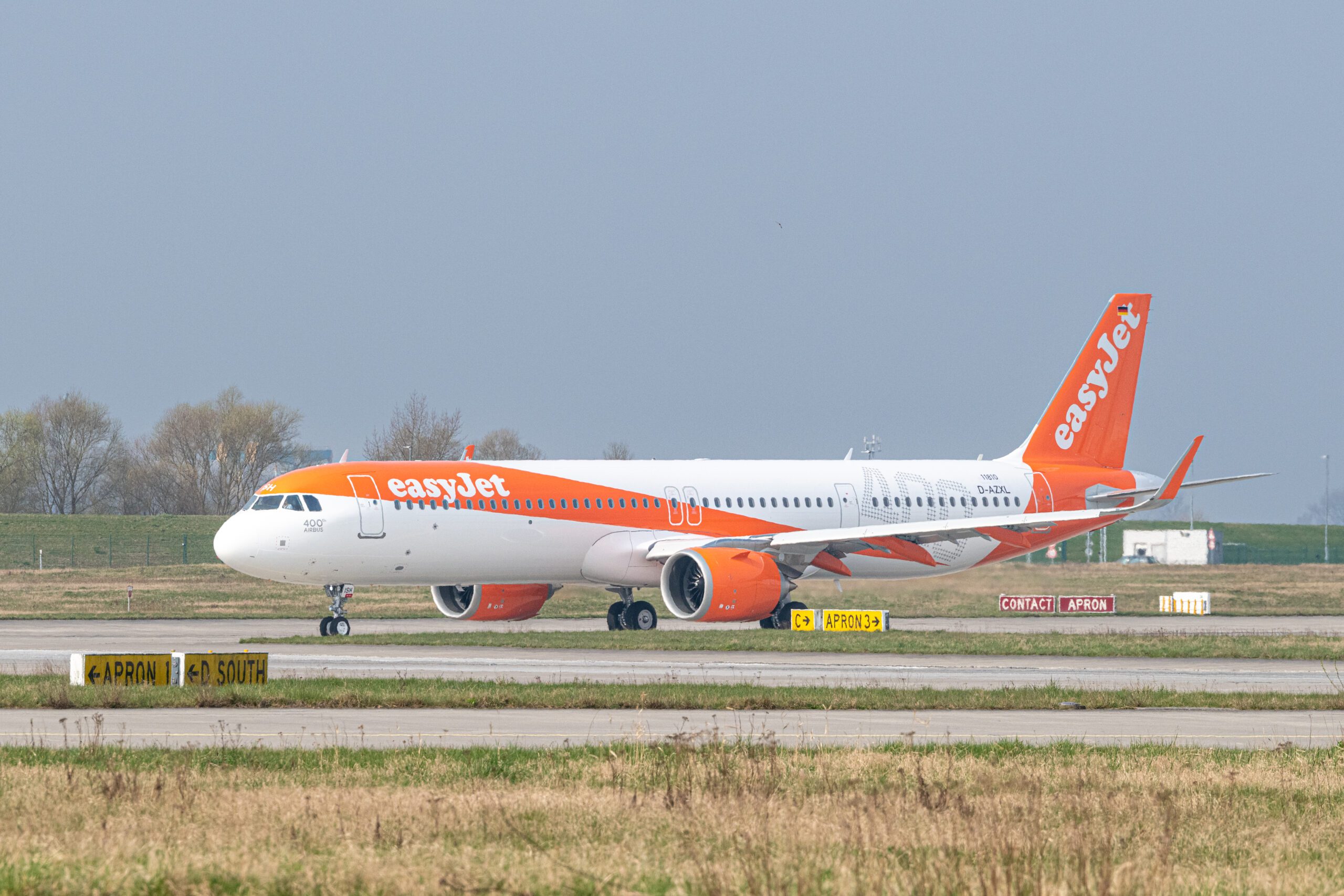
Ryanair + EasyJet
You certainly wouldn’t know it from their loss-stained Q1 income statements. But ignore that. Things are looking rosy for the far more important peak summer season.
Qatar Airways
Its finances are rather opaque. But the Gulf carrier reported strong results for its latest financial year. It says this year should be even better.
Who's Feeling Low?
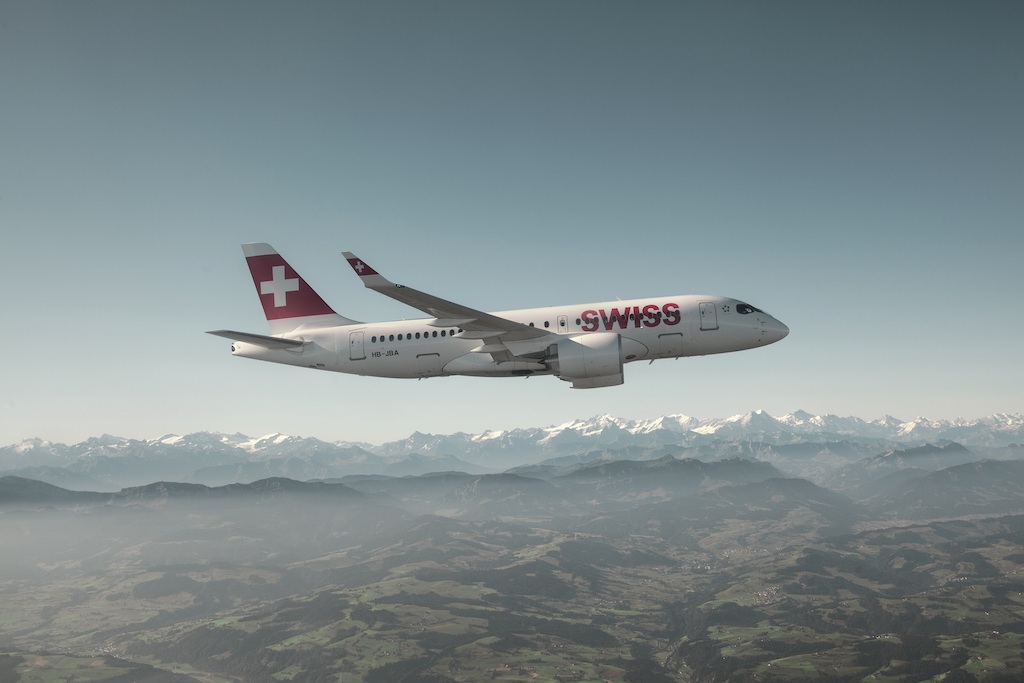
Swiss

Swiss is cancelling around 1,400 flights this summer due to a lack of pilots. Around 1.5% of all departures during the peak period are due to be affected.
Airbus
Close, but no cigar for Team Toulouse. Speaking to CNN, Qatar Airways CEO Badr Mohammed Al-Meer said the decision to pick Boeing over Airbus was “very, very, very, close.”
American + Southwest
Both carriers said domestic leisure markets remain significantly weaker than they were looking a few months ago. On the other hand, the deterioration doesn’t seem to be getting any worse.
— Jay Shabat and Gordon Smith
Weekly Skies
Ryanair Expects a Summer of Fun
- Wait, what? Ryanair suffered a negative 21% operating margin in the January-to-March quarter? Yes, it’s true. But before you call an ambulance, rest assured that Mr. O’Leary and friends are doing just fine.
- The first quarter is sleepy for all European airlines, especially during years when Easter falls in Q2, as it did this year, and as it did two years ago, when Ryanair’s operating margin was also in the negative 20% territory. Last year, with help from Easter, it was negative 15%.
- Alright, now that you’ve calmed down, here’s the true condition of Ryanair’s business: It’s as healthy as ever. Looking ahead to the all-important peak summer season, bookings at this point look strong: “We are seeing robust [summer] travel demand across our network.” Even better, “everybody is pricing up.” This pricing momentum rests upon both strong demand and constrained supply, with Ryanair itself planning to increase seat capacity just 3% over the next 12 months. It would prefer to grow faster but still can’t get Boeing Max jets as fast as it would like. Max-10s aren’t yet FAA-certified, and Ryanair doesn’t expect them until the spring of 2027. On the other hand, Boeing is making good progress in lifting the pace of production and deliveries for Max 8200s. According to O’Leary—that’s CEO Michael O’Leary, of course—“In April, Boeing delivered 45 aircraft compared to just 24 aircraft in April 2024.” Ryanair, by the way, now has more than 600 planes in total, flying more than 200m passengers annually.
- To be sure, the magnitude of peak summer profits will also depend on yields for late-booking travelers, who are typically the highest-paying travelers. But again, all signs point to strength. Last year, Ryanair lost some demand in a dispute with online travel agencies and tour operators. It has since secured agreements with many of those companies, including large ones like TUI. It’s also benefiting as rivals consolidate, i.e., Lufthansa buying Italy’s ITA, which has, sure enough, led to ITA raising fares, according to Ryanair. It expects TAP Air Portugal to be bought next.
- Asked if weakening transatlantic demand might affect demand from Americans flying shorthaul within Europe, O’Leary said no, “We see no decline in the inbound transatlantic to Europe this year.” If anything, the decline of travel in the other direction—Europeans foregoing holidays to the U.S.—will help Ryanair if they holiday instead within Europe. O’Leary also remarked, “We don’t foresee tariffs being a big issue,” expecting new trade deals that will remove the risk of E.U. tariffs on Boeing planes. In any case, even if they’re levied, Ryanair expects Boeing to pay.
- All the while, fuel prices are dropping, though only 15% of its fuel needs are unhedged for the next few quarters—the other 85% is locked in at $76 a barrel for crude oil. It did buy hedges for about 40% of its summer 2026 needs at $66 a barrel.

- Overall operating costs managed to stay flat per passenger over the 12 months through March. As a reminder, Ryanair manages to keep costs low with heavy use of outsourcing, favorable aircraft pricing, adding more Max jets, use of technology (like airport self-service kiosks), economies of scale through growth, limited third-party distribution, a no-frills and all-economy product offering, a super-strong balance sheet and credit rating, running a smooth operation (easier to do at the many small airports it serves), free marketing every time O’Leary says something outrageous, and a network strategy that allocates growth to airports and countries that offer it the lowest costs.
- Now that it’s growing at just a 3% annual pace (compared to 9% last year), it’s more demanding of airports than ever. “We’ve been trying to allocate more capacity in those countries and regions [that are] abolishing taxes: regional Italy, Hungary, Sweden, and those airports who are still incentivizing growth.” Rivals, it said, are in the meantime facing higher costs, especially in the areas of financing and aircraft leasing. “The unit cost gap between us and every other airline is getting wider… If you look at the reports from all of our competitors across Europe in the last year, they’ve seen unit cost rise from between 5% to 15%.”
- O’Leary expressed particular disdain for Wizz Air, which he said would eventually “have to find a home somewhere with one of the bigger airlines because they clearly can’t make any money as an independent airline.” (Wizz will present its calendar Q1 results on June 5th). He said this will ultimately happen to easyJet as well.
- Does Ryanair plan to launch a holiday tour package business, like easyJet successfully did? No, “we’re not interested in holidays… I really don’t want to waste our time and resources running around places like the Canaries or Greece trying to buy local hotel rooms… We want them [partners like TUI] to do the heavy lifting.” Ryanair would however like to rebuild its presence in Ukraine and Israel when security conditions allow. It’s also eager to grow its new Prime membership subscriptions.
EasyJet Heads Into Summer Looking Strong
- The coming summer peak is looking good for easyJet too, supported by a fast-growing and profitable Holidays business (selling flights packaged with hotel rooms and other travel products). The LCC’s negative 22% operating margin last quarter was nothing abnormal. Nor does it have any pretensions of ever making a calendar Q1 profit. New CEO Kenton Jervis, however, would like to turn the October-to-December quarter profitable, following a negative 2% margin during that quarter last year. One key to doing so is the family visit market to North Africa, which peaks counter-seasonally. Another is adding more overall capacity during the Christmas travel rush.
- easyJet grew its ASK capacity 14% y/y last quarter, which partly reflects longer stage lengths to more distant holiday hotspots like the Canary Islands and Egypt’s Red Sea resorts. It also reflects an upgauging strategy, in which A319s are exiting and larger A320neos and A321neos are entering. As always, the airline is diligently battling cost inflation, improving its revenue management techniques, and adjusting its network to favor bases earning the best financial returns.
- It’s got two new Italian bases—Rome Fiumicino and Milan Linate—thanks to slots that ITA was forced to surrender in conjunction with its acquisition by Lufthansa. Outbound U.K. demand is surely healthy, prompting new bases like Southend this summer (within London’s catchment area) and Newcastle next summer. About a quarter of Southend bookings, the airline said, are through easyJet Holidays. It also cited Birmingham, Manchester, Bristol, and Edinburgh as strong performing markets, along with Paris Orly in France, Palma in Spain, and Basel on the French/Swiss border.
- April was a strong month, which bodes well for the summer. In the meantime, capacity across Europe is constrained by aircraft shortages. easyJet itself is slowing capacity growth. “If you look at the four quarters, Q1, 3, and 4 are now above the pre-pandemic levels of production. But even post this capacity investment, Q2 is still about 6% lower than pre-pandemic in terms of seats.” Note: these quarters are in accordance with its fiscal calendar, in which Q1 refers to October-December, and Q2 the January-March lull.
- One key difference between Ryanair and easyJet is that the latter prioritizes flights from slot-constrained airports, most importantly London Gatwick. In fact, almost 90% of easyJet’s capacity flies from slot-constrained airports, at least during peak times.
- A final thought: Would it make sense for easyJet to launch a true loyalty program? “I think it could,” Jarvis said in the company’s earnings call last week. “It has a brand that can do that, and that’s something we would naturally look at. But there are no plans to introduce that this year or early next year.”
The Latest from America
- At a Wolfe Research investor event in New York last week, American’s CFO Devon May said the demand weakness first evident in March has “probably eased over the past month or so.” Bookings, he added, have “stabilized,” though “at a lower level than what we’d expected at the start of the year.” As discussed in its Q1 earnings call last month, the demand weakness emerged primarily in the domestic leisure economy segment. And that market remains softer than expected but not deteriorating any further. May said international trends continue to look strong, with transatlantic markets performing well, “Deep South” Latin American markets “doing really, really well for us,” and Asian markets likewise in good shape.
- In any case, he argued, American is well set up to succeed longterm in any demand environment. As for 2025, if demand trends more or less remain where they are now, the airline will likely post a full-year profit, producing positive free cash flow. Looking ahead, its investment spending needs are modest. It’s made big strides on cutting debt. It has a lucrative new credit card deal with Citi. It has roughly 70 longhaul-capable planes on firm order—some 30 additional B787s and 40 A321-XLRs. It’s confident about winning back corporate and agency customers it alienated with an ill-fated distribution strategy. It’s building back hubs like Chicago and Philadelphia, supported by a regional fleet that’s finally back to full utilization. It sees opportunities in Los Angeles once airport construction projects are finished. Its sun-belt hubs—Dallas DFW, Charlotte, Miami, and Phoenix—are benefiting from above-average economic and demographic growth. And its New York business, and maybe even its Philadelphia business, stand to benefit from air traffic control woes at United’s Newark hub. To be clear though, May expects the benefit to be “relatively modest.”

- Perhaps most encouragingly for the upcoming weeks and months, many U.S. airlines say they’ll be cutting domestic capacity in accordance with softer demand. American will consider its own capacity reductions, mindful that shrinking comes with the toxic side effect of raising unit costs (economies of scale in reverse).
- Separately, May addressed American’s well-documented operating profit margin gap with Delta and United, calling it somewhat skewed by depreciation and amortization costs. Still, he acknowledges a roughly two-point gap with both rivals on an EBITDA basis (which ignores depreciation and amortization). Delta, he notes, benefits meaningfully from its third-party maintenance business. In addition, the lost business from American’s own distribution strategy accounts for “a meaningful component of the margin gap that existed last year.” So, is May content? No. “It’s not where we want to be.”
- At that same Wolfe Research event, Southwest’s new CFO Tom Doxey echoed May’s characterization of the demand environment, citing “relative weakness for main cabin leisure.” With a large exposure to domestic business traffic, Southwest isn’t feeling the weakness quite as much as more leisure-heavy LCCs. Still, Q1 unit revenues came in about three points worse than its expectations at the start of the year. Q2 is running about six points worse. Demand began weakening at the end of Q1 and hasn’t yet seen “an inflection back.”
- Doxey spoke mostly about the barrage of changes the airline is making, including bag charges and new basic economy fares that take effect this week. It’s also selling through Expedia now, adding extra-legroom seats, assigning seats, letting refund credits expire, and so on. “There’s a lot happening… The pace of change at Southwest, I think, is something that’s very different than it was before.”
- And there’s more to come. “We’ve been pretty open about the fact that we’re not done… don’t think of this as the end state, what we’ve announced.” It’s at the same time shuffled its network, heavily downsizing in Atlanta, for example, while growing in places like Nashville and Phoenix. This quarter, according to Cirium Diio, Southwest’s total seat capacity will be down about 1% y/y.
Laughing All the Way to the Bank: Do-haha
- Qatar Airways said it earned a $2.5b net profit in the 12 months from April 2024 to March 2025. This includes results from its large cargo operation, as well as businesses like catering and duty-free sales—these non-passenger activities account for about 30% of the group’s $23b in total annual revenue. That $23b, by the way, makes Qatar Airways one of the largest aviation groups on planet earth, similar in revenue scale to Air China and Turkish Airlines.
- What’s harder to know is the true extent of its profitability, specifically that which stems from its core passenger operations. Its latest annual income statement, audited by the global accounting firm Deloitte & Touche, shows a groupwide operating margin of 17%, exactly what Emirates reported. But including “general and administrative” costs itemized below the operating line, the margin figure drops to 10%. Again, an unknown portion of this comes from auxiliary business units, including what’s surely a lucrative monopoly on selling alcohol within Qatar. Company financial statements do show that the duty-free division, which holds the monopoly, generated nearly $1b in revenue last fiscal year ($977m to be more precise).
- All of that aside, Qatar Airways should rightfully measure its success not only by its financial returns but also by its contributions to Qatar’s economy and geopolitical influence. It employs about 55k people worldwide, and its buying power is enormous, a fact not lost on Boeing, which just received another gargantuan Qatar Airways widebody order. The airline, backed by its government, also engages in billions of dollars’ worth of investment in overseas airlines, not least the mighty IAG led by British Airways and Iberia—Qatar owns a 24% stake. It also owns 10% of Latam, 10% of Cathay Pacific, and 3% of China Southern. Last year it purchased 25% of the South African regional carrier Airlink. This year it purchased a 25% stake in Virgin Australia. How nice it must be to have a shareholder awash with hydrocarbon riches.
- Doha, for sure, doesn’t have the airline earnings power that Dubai does. But its geography alone makes it a strong connecting hub for many international traffic flows. According to Cirium Diio, the airline’s five busiest routes from Doha (by total seat capacity) are London Heathrow, Bangkok, Jeddah, Dubai, and Riyadh. In terms of countries, its largest markets are the U.K., the U.S., Saudi Arabia, India, and Thailand. According to Cirium’s FM Traffic tool, which tracks connecting flows, Qatar’s London Heathrow flights attract lots of travelers starting or ending their journeys in Pakistan, a large country without a strong national airline.
- Saudi Arabia and India, however, are now homes to fast-developing airlines, which could divert traffic away from hubs like Doha. IndiGo (see feature story below) is one such airline. Riyadh Air, just getting started, is another. For now though, Qatar Airways looks forward to another successful year, affirming in its annual report that “Our best year commercially in the airline’s history was 2024, and we fully expect demand in 2025 to remain as strong.”
Routes and Networks
Airlines Agree Newark Capacity Cuts
- There will be fewer flights than expected out of Newark this summer. In the last fortnight, the FAA has met with major U.S. operators at the New Jersey airport to agree network revisions. It follows a series of setbacks for the airport, with runway construction and high-profile ATC outages major contributing factors.
- The FAA confirmed that Newark will be able to accommodate 28 arrivals and 28 departures an hour until runway construction is complete. Outside of the construction period, the airport will have up to 34 arrivals and departures an hour until October 25. The FAA said daily construction at Newark will end June 15, but will continue on Saturdays until the end of the year.
- The airlines present at those meetings were American Airlines, Delta, United, Alaska Airlines, JetBlue, Spirit, and Allegiant Air. The FAA said representatives from these carriers met with the agency one-on-one “to find a balance between reducing their operations at the airport and meeting the needs of each individual airline.”
- “Our goal is to relieve the substantial inconvenience to the traveling public from excessive flight delays due to construction, staffing challenges, and recent equipment issues, which magnify as they spread through the National Airspace System,” Acting FAA Administrator Chris Rocheleau said in a statement.
IndiGo Confirms Europe Launch
- We’ve known for a few months now that Amsterdam and Manchester are IndiGo’s first long-haul European destinations. We now know when exactly the first flights will take off. The inaugural Mumbai to Manchester is on July 1. Just a day later, on July 2, the carrier will begin service from Mumbai to Amsterdam. These will be the airline’s first long-haul flights using widebody aircraft. As previously reported, the aircraft will be operated with damp-leased B787-9s from Norse Atlantic Airways (see more in our feature story below.)
- IndiGo says the onboard offering will differ from its domestic and regional network. The Dreamliners are configured with 338 seats — 56 in IndiGoStretch and 282 in standard economy. IndiGoStretch offers 43-inch seat pitch with a 2x3x2 configuration, and will be very familiar to anyone who has flown Norse, or its Norwegian predecessor. Economy seats have a 31-inch pitch in a 3x3x3 layout. All passengers, regardless of cabin, will receive complimentary hot meals, a first for the carrier. In IndiGoStretch, this will include alcoholic beverages, while economy passengers will receive complimentary non-alcoholic drinks, with the option to purchase alcohol.
- IndiGo has been warming up the Norse 787s, with one already plying the busy Mumbai–Bangkok route. These aircraft will bridge the gap until IndiGo’s own A321XLRs arrive, followed by A350-900s from 2027 onwards. With these aircraft, IndiGo aims to gradually build a long-haul network that mirrors its successful domestic and regional operations, which includes low-cost, point-to-point flights.
- “International air travel in India was catered to by non-Indian airlines for a long time. The further away you go from India, the lower is the market share of Indian carriers. There is an opportunity for us to offer a product that is operated by an Indian operator and address that market,” Elbers said at the Skift India Forum in March. However, Elbers did say that there will still be some time before IndiGo enters ultra long-haul operations: “There is a lot of long-haul flying to do before we go the ultra long-haul route.”
Delta Returns to Israel
- Delta officially resumed service to Tel Aviv on May 20 after suspending service to the city following a May 4 missile attack at Ben Gurion Airport. The carrier said it made the decision to resume service following an “extensive security risk assessment.” Delta had issued a travel waiver between May 4 and May 25.
- Delta’s decision comes as many European carriers continue to suspend flights. Virgin Atlantic, itself 49% owned by the Atlanta-based firm, said on April 28 that it would cancel flights to Tel Aviv indefinitely. Lufthansa meanwhile plans its suspension until June 8. United Airlines, the only other U.S. carrier to currently fly to Israel, didn’t suspend flights after the attack, but warned that travel scheduled between May 4 and June 2 may be impacted. American Airlines services to Tel Aviv remain suspended.
Routes In Brief:
- JetBlue has beefed up its European network for the summer season. On May 22, it launched two new nonstop routes from Boston to Madrid and Edinburgh. Daily services will operate until October 25. As well as flights to the Spanish and Scottish capitals, a seasonal service between Boston and London Gatwick has also resumed.
- Delta is doubling down in Italy. On May 21, it started nonstop service between New York JFK and Catania. It becomes the fifth Italian city served by Delta from the U.S., along with Rome, Milan, Venice and Naples. The carrier offers up to 110 weekly flights between the U.S. and Italy this summer, an increase of around 15% y/y. The new route is operated by a 216-seat B767-300.
- Not to be outdone by Delta, United has been busy adding frequencies and new, or resumed routes of its own. Among the highlights is a nonstop link from Newark to Faro in southern Portugal. Proving that the ‘flying pencil’ still has plenty of lead left, United is rostering the B757 for the four-times weekly seasonal link.
- It isn’t just U.S. airlines flying to Europe. Air France (re)launched a new transatlantic route of its own last week. May 21 marked the first flight to Orlando from its Paris CDG hub. The four-times weekly service is operated by a three-class A350-900. The French flag carrier previously served the Florida airport until 2012. Orlando becomes the airline’s 18th scheduled U.S. destination.
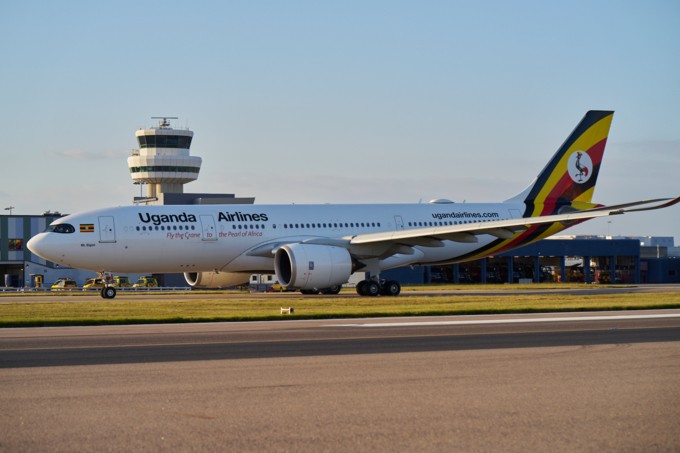
- Between the usual stream of easyJet tails at London Gatwick last week was something much more exotic. On May 19, Uganda Airlines launched a new route from Entebbe. Operated by the carrier’s flagship, the relatively rare A330-800neo, it represents the only nonstop flight between the two countries. Other African operators serving the London gateway include Ethiopian Airlines, Air Mauritius, Royal Air Maroc, and Nigeria’s Air Peace. A new Kenya Airways service to Nairobi is due to start in July.
— Gordon Smith and Peden Bhutia
Additional reporting by Meghna Maharishi
The Stock Take
Airline Performance
May 19-23, 2025
What am I looking at? The performance of airline sector stocks within the ST200. The index includes companies publicly traded across global markets including network carriers, low-cost carriers, and other related companies.
The Skift Travel 200 (ST200) combines the financial performance of nearly 200 travel companies worth more than a trillion dollars into a single number.
Picture Perfect
Our favorite image from recent global airline developments
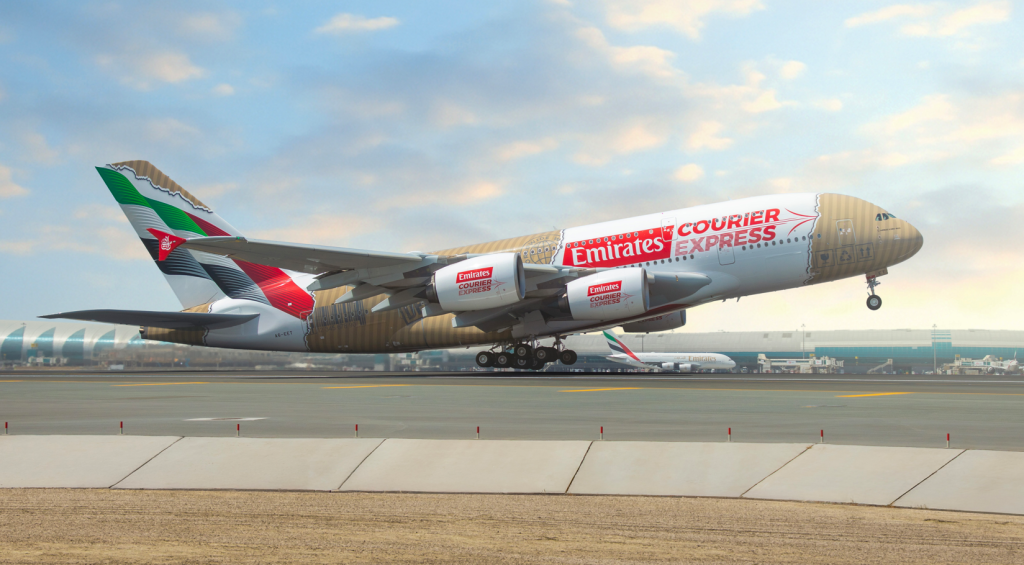
Emirates continues to prove that the super-jumbo can be an excellent canvas for a quirky special livery. Its latest A380 design promotes Emirates Courier Express, a “new door-to-door delivery solution” provided by the company. The project was completed in-house by Emirates Engineering and gives the illusion that the aircraft’s nose and fuselage are wrapped in kraft paper, torn to reveal the UAE flag.
Feature Story
The IndiGo Show
Congratulations IndiGo. You’re now a member of the Ten Billion Dollar Club.
Only about 20 other airlines worldwide generate more than $10b in revenue annually. IndiGo is also the club’s youngest member—it’s still a teenager at 19. But much more important than either its size or its age is its consistently strong profitability. IndiGo earned 13% operating margins in both calendar years 2023 and 2024. It’s off to a great start in 2025, having just reported a 16% figure for the January-to-March quarter. This was three points better than its result from the same quarter last year.
IndiGo’s extraordinary rise from startup LCC in 2006 to the $10b Club in 2025 is likely just an opening act. Last year, IndiGo ordered widebodies for the first time, specifically 30 A350-900s. That’s a manifestation of its strategy to challenge Air India and the Gulf carriers in intercontinental markets. The A350s won’t start coming until 2027. But an airline this ambitious can’t wait until then. Its overseas push begins in July, with new thrice-weekly service to both Amsterdam and Manchester using B787-9s leased from Norse Atlantic—IndiGo plans to have six of Norse’s Dreamliners by January. Interestingly, it will serve these two European markets from Mumbai, not its hometown Delhi, where it can generate more connecting traffic.
Later this year, IndiGo will start taking A321-XLRs for routes too distant for standard A321s but not quite long enough or busy enough to merit widebodies. Two XLR markets on its radar: Delhi to both Kenya’s capital Nairobi and Indonesia’s tourist mecca Bali.
"The airline is now flying more than 100m passengers annually, with a fleet of more than 400 planes..."
As it ventures further abroad, IndiGo is also venturing further upmarket, launching a new business class product last year. It launched a loyalty plan as well, already with about 3m members. The airline is now flying more than 100m passengers annually, with a fleet of more than 400 planes. It has a total of 920 planes on order, according to Cirium Fleets Analyzer. That’s more than any other airline in the world. Currently, it’s the single largest recipient of Airbus planes worldwide.
Too ambitious? IndiGo justifies its hearty appetite with reminders of India’s massive potential. The country is home to nearly one of every five people on earth. It’s the fifth largest economy behind only the U.S., China, Germany, and Japan. It’s already the third largest airline market behind the U.S. and China. Its railroads currently move 7b passengers annually, many of them long distances. It has more citizens living and working abroad than any other nation.
Importantly, India’s economy is growing rapidly, with GDP expected to expand 6% this year, according to the IMF. Though new U.S. tariffs threaten this growth, India might yet emerge a trade war winner, with companies like Apple shifting some of its production from China. India also has a new trade deal with the U.K., which IndiGo CEO Pieter Elbers referenced recently while speaking with Skift’s Gordon Smith.
"Though new U.S. tariffs threaten this growth, India might yet emerge a trade war winner..."
The bull case for India doesn’t stop there: New airports are opening, outbound tourism is growing, and cargo could become a major source of airline earnings in the years ahead. Elbers said himself, “The opportunity for cargo really is very, very significant.”
IndiGo’s hearty ambitions are further justified by the absence of strong homegrown competition. It will compete with muscular Gulf carriers and other global players through their offshore hubs, for sure. But only one other airline offers nonstop widebody intercontinental service to and from India. Alas, that airline, Air India, hasn’t been known for teaching master classes on good service. In fairness, Air India is now privatized, under new management, merged with Vistara, armed with new planes, and backed by the mighty Singapore Airlines. But it still has a lot to prove.
Domestically, meanwhile, IndiGo exercises dominance. During the past 12 months, according to Cirium Diio, it offered nearly 700k domestic departures. Air India, by contrast, even after combining with Vistara, Air India Express, and the old AirAsia India, offered about 300k. The youthful Akasa will grow thanks to a 200-plane Max order. But last year, it offered only about 50k flights. SpiceJet, a long-troubled contender, offered about 40k. The only caveat to the assertion about IndiGo’s domestic dominance is that Air India does offer similar or even more numerous flight frequencies in key markets connecting India’s largest cities—it offers more daily flights on the Delhi-Mumbai route, for example.
In any case, nothing seems to get in the way of IndiGo’s fiery desire to grow. It would have preferred faster growth coming out of the Covid crisis but was forced to ground many of its Airbus Neos due to industry-wide GTF engine inspections. This led to more than 70 aircraft groundings at one point last year, though the number is now “in the 40s” and trending down further. IndiGo still managed to grow its ASK capacity by 13% in its fiscal year that ended in March, and 21% y/y in just the January-to-March quarter. Even so, its load factors and yields both increased y/y that quarter.
"IndiGo still managed to grow its ASK capacity by 13% in its fiscal year that ended in March..."
Indeed, it was an excellent quarter overall. Operating revenues grew faster than operating costs, lifted by strong demand for both domestic and international routes. One reason was the Maha Kumbh religious pilgrimage, held once every 12 years. This drove a “surge” in domestic traffic to the city of Prayagraj, most notably. Early last year, by contrast, IndiGo encountered a “temporary moderation in demand” that it blamed on national elections and excessively hot weather. Later in the year and into this year, however, “We witnessed a remarkable surge in demand, primarily driven by festivities, wedding season, and, of course, the Maha Kumbh.”
And what about the new quarter that started in April? Will it be another roaring success?
Maybe not. April, happily, was “very, very strong.” In early May, however, tensions between India and Pakistan led some people to cancel their bookings or decide against booking new trips. “The moment that the geopolitical event kind of transpired, we’ve seen a significant amount of cancellation.” But the dispute wasn’t confined to just India and Pakistan. The Turkish government’s support of Pakistan caused some Indian tour operators to cancel trips to Turkey—tensions with China have escalated for the same reason. IndiGo is feeling pressured, furthermore, to end its codeshare relationship with Turkish Airlines.
In addition, Pakistan’s airspace closure led IndiGo to cancel a few of its international routes, including Tashkent and Almaty, both in central Asia. The cross-border tensions also caused the airline to suspend operations from 11 airports in northern India for about a week. The good news, though, is that the worst seems to be over and the adverse booking trend has “started to reverse.” It's still hopeful of a “very strong June.”
None of this, however, diminishes IndiGo’s enthusiasm for the years ahead. Next week, it will host IATA’s annual general meeting in Delhi, a recognition of sorts that IndiGo—in the words of Elbers—“is on the way to become a global aviation giant.”
On Our Radar
At the end of every issue of Airline Weekly, we wrap up the edition with the key dates that should be in your diary for the coming days.
Expect major financial updates as well as slightly more left-field events which have noteworthy potential.
Have an event that you think should be On Our Radar? Email gs@skift.com

Key events to watch in the coming days:
Thu.
May 29
Bernstein Conference
Boeing president and CEO, Kelly Ortberg, is among the big names due to speak at the Bernstein 41st Annual Strategic Decisions Conference on Thursday. Senior representation from United Airlines is also expected.